

Stories &
Discoveries
"The real voyage of discovery consists not in seeking new lands but seeing with new eyes."
_Marcel Proust.
Snippets of thoughts
Stories, Questions & Learnings
When the Decision Is Already Made
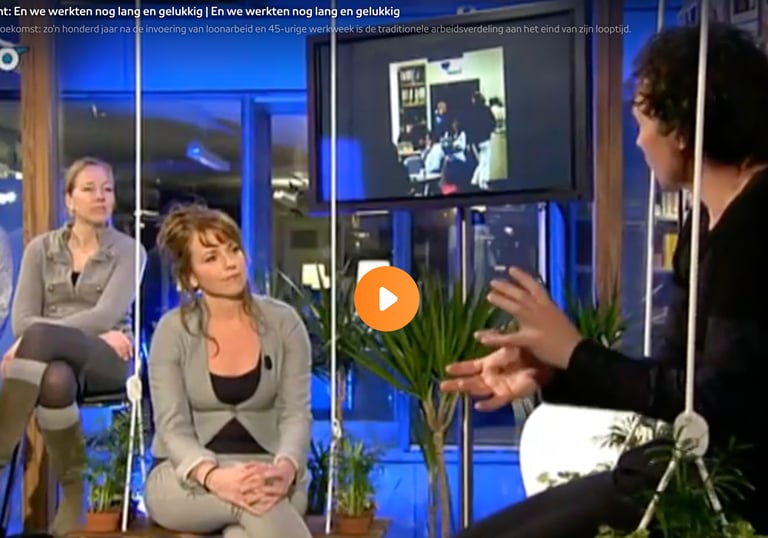
In 2013, I was interviewed as the founder of Impact Hub Amsterdam alongside the pioneers Ricardo Semler and Herman Wijffels for a documentary*.
We spoke about business built on freedom, genuine connections and shared purpose. Ideas that were considered radical at the time. Impact Hub was one of the first spaces nurturing entrepreneurial leadership for a better world. We believed we were shaping a new economy. Initially, this was met with skepticism. Today, many have followed. That’s the good news.
What I did not know is that, behind the scene, the conclusion of the program had been written before the interviews even began. After the conversation, we were kept waiting for over an hour as the host had to rewrite his ending because it no longer matched what had actually been said. Reality had disrupted the narrative. If you watch closely, you’ll notice attempts to steer the conversation toward a hidden agenda. And yet, the answers offered didn’t fit the script.
How many meetings have you been in where the leader pretended the decision was still open for discussion, when it wasn’t? How often do we invite dialogue or participation while protecting a pre-made agenda?
This isn’t per se bad intentions. We seek certainty and control. But real leadership begins where we are willing to be changed by the conversation.
Not when we already know the answer.
*Full episode here. (Dutch only)
Origin Story: Cultivate Center
Where Leadership Really Begins

I never studied with a job in mind. I studied to understand the world. That curiosity quickly made me an outsider among my peers. Sociology and International Business gave me language and structure, but little of it felt transcendent. I often challenged what was being taught questioning assumptions, pointing out flaws, suggesting alternatives. It didn’t always land well. Speaking up wasn’t particularly rewarded back then.
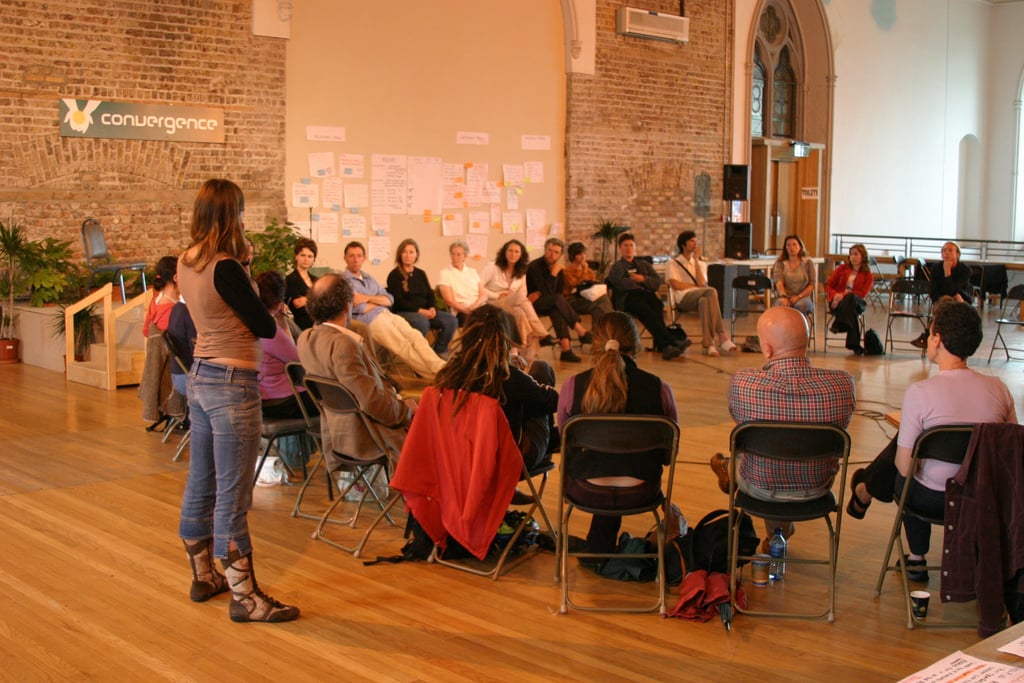
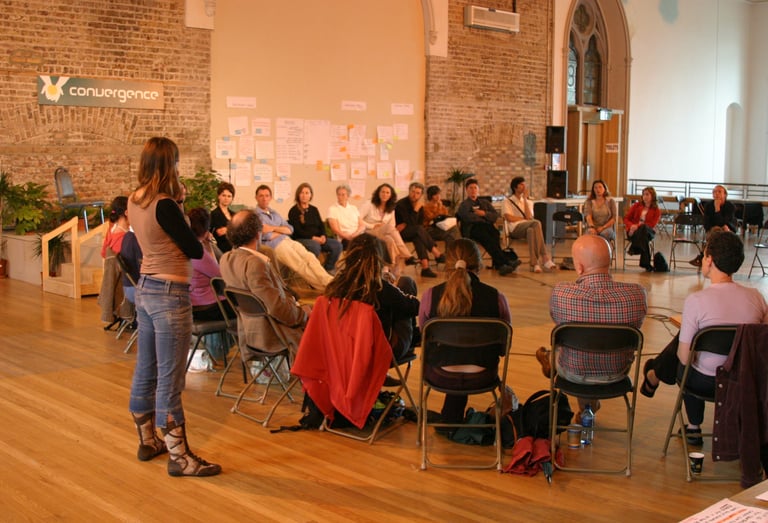
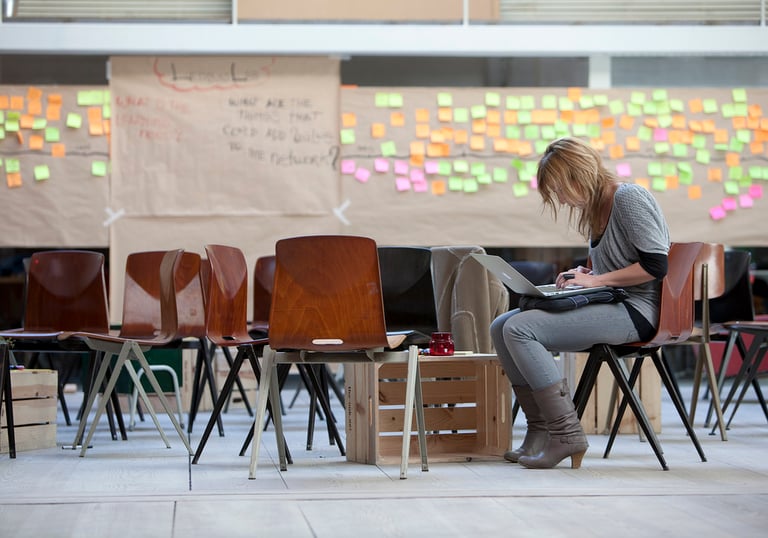
Everything shifted during an internship in Dublin at the Cultivate Sustainable Living Center. My assignment was to organize an Open Space Forum for their annual festival. Something profound happened there. For the first time, I experienced real conversations _ genuine interest, active listening and shared ownership _ held within a simple structure that balanced purpose, freedom and responsibility. It was a revelation. I had found something truly meaningful. Back in the Netherlands, I went searching for people working in this space. That search led me to Engage! InterAct, the consultancy where my professional journey truly began.
What I learned early on and still see reflected in organisations today _ is this: leadership doesn’t come from control or expertise alone, but from creating the conditions for meaningful conversation to happen. When people are trusted with purpose, freedom and responsibility, intelligence emerges naturally. The role of a leader is not to have all the answers, but to design the space where the right questions can be explored.
Over the years, I’ve explored where leadership work has the greatest impact. My answer, shaped by experience: it begins with the Self.
The Self is the primary place from which a leader relates to people, to the organisation and to the wider environment it participates in. How we listen, decide, react or inspire is shaped first and foremost by who we are Being in any given moment. Without awareness of this "inner landscape", leadership becomes mechanical at best, reactive at worst.
Relational skills are, without question, in higher demand than ever. Trust, communication, collaboration _ these are no longer “soft skills,” but core leadership capabilities. Yet practicing them without a foundation of self-awareness is like building walls without laying the ground first. It may look solid for a while, but it won’t hold under pressure.
And yet, most often attention goes to structures, processes and strategies. They give the reassuring impression that something concrete is being addressed. But it’s an illusion. Organisations don’t operate themselves. People do. And it is culture _ the invisible web of beliefs, behaviours and relationships _ that infuses every system and process.
When the Self is neglected, culture becomes accidental rather than intentional.
If we want to lead organisations that are resilient, adaptive and truly alive, we must start where leadership actually lives:
within, between, and only then across the system.

More to come...